Showing posts with label composition. Show all posts

Thursday, January 29, 2026

Working with perspective

In a recent workshop with Leigh Ellis we reviewed the artist rules of perspective that is used to make objects look three dimensional on a two dimensional piece of paper.  It also conveys scale and realism to a painting. 

This is done using: converging lines, vanishing points, color intensity and shifting, edge definition, shadows and highlights.  

For example, the converging lines in this sketch meet at the vanishing point on the right edge of the paper.  They were used to define the height of three people walking toward the vanishing point.  


The same converging lines and vanishing point were used for the watercolor, below along with the other tools mentioned above.  
  • The light from above is brighter around the closest person, making both the highlights and shadows around them stronger. 
  • The closest red umbrella is brighter, while the others are paler and shift to a red-blue.
  • The edges of the closest person where light and dark meet are distinct, but they are less distinct on the further people.

In some cases additional vanishing points are needed to define your view.  For instance a house on a corner would need two vanishing points.  Shadows from the sun or clouds overhead would need additional vanishing points.   


Wednesday, December 3, 2025

Additional 2025 watercolors from workshops

Here are a few other watercolors from workshops with Leigh Ellis.  In each workshop we worked from photos.  I did not take the photos, and the paintings are not replicas of the reference photos.  

Snow!
We worked on a winter scene of a forest with a stream in the snow.
  • First a light sketch of the stream and surrounding trees.
  • Then a splattering of masking for snow
  • Add light wash for the sky and background trees
  • Paint the dark foreground trees and their shadows on the snow banks
  • Darkening the background trees and add shadows to the snow banks
  • Painting the reflecting light on the stream and the shadows of the banks
  • Darkening edges of the banks, rocks and trees         
  • Create additional depth with shadows and highlights
  • After the painting is completely dry, remove the masking 


Birds in winter and summer
Because we are so familiar with birds, getting many details correct is important:
  • Size and shape of the head, body, tail and wings.
  • Color of key characteristics that identify the species.
  • Realistic body positioning when perching or flying.
  • Correct habitat can also be important.
Birds are very round, and the illusion of roundness on a flat piece of paper is created by creating shadows and highlights.

The colors in the shadows can be cool or warm
  • Cool colored shadows (bue-purple) indicate a winter day
  • Warm colored shadows (brown-purle) indicate a warm summer day

Saturday, January 25, 2025

2025 watercolor workshops with Leigh Ellis

I have taken several watercolor workshops with Leigh Ellis through the years.  I love her paintings.  They glow with light and energy.  So when I heard she had weekly small group workshops I quickly signed up.

The first workshop we worked on painting light.  We did two still paintings one of white flowers and the other of a hay field in the sun.    


The flowers were white on a dark background.  To retain the white of the flowers we masked them, then painted the background.


Once the background was dry, the masking was removed and we painted the branches as flower shadows.


The Hay field was painted in several steps.  First the barn and highlights of sun were masked.  Then a double wash of blue sky and yellow field were layed down on the paper.  Then the tree line at the fare end of the field and the grasses along the front are painted in.  


Below, you can see the painting with masking (pale blue on the barn and hay bales), the washes of blue sky and yellow field, pale green trees in the background and grasses in the foreground.


I did some color testing to determine how I would handle the barn and trees.  


I used quinacridone gold orange and rose; along with mixed greens from cobalt and phalo blue.  


I find testing the color combinations and mixes before adding them to the painting is an important step.  


                                    Below is the finished painting


Saturday, April 30, 2022

OCAF & GWS watercolor workshop

Transparent Watercolor on Paper and experimenting with Mixed Water Media on Yupo, a workshop by Mark Mehaffey.  This workshop was offered as part of the 2022 Georgia Watercolor Society's National Exhibition held at OCAF.

It was three day zoom workshop.  During the workshop he provided us with information on his painting methods and techniques.  We were able to ask questions and share our work-in-progress for critique and assistance.  We looked at some of Mark's paintings as part of our discussion.  I would describe the paintings as abstracted realism.  We spent time on planning our paintings.  Using exercises to help us develop the relationship of the shapes, color values.  I learned a lot from the workshop.  

Value studies:

The first watercolor painting was done on heavy watercolor paper with two coats of gesso.  This treatment adds texture and allows easy lifting of paint.  To preserve the paint a sealing coat is sprayed on the painting.  I used a photo of the Grand Tetons from a trip several years ago as my reference.  

This watercolor was done on Yupo, a plastic paper that allows paint to easily flow across the surface.  Paint can also be quickly removed with water.  To preserve the paint a sealing coat is sprayed on the painting.  These are total abstracts.  


Friday, April 28, 2017

At the edge of the forest


For my final painting I used a photo I had previously taken of a small rock building at JCCFS.  I love the multicolored rocks in the building and the contrast of the shadowed deep woods and open area around the building.  Part of the class discussion, was about narrative.  How do we convey a story through our paintings.  This painting tells a story of living on the edge; between the beauty and unknown of the deep green forest and the structured world humans construct.


To create the deep green shadowed forest. I masked the trees on the forest edge.  I used a small masking fluid container that had a thin tube applicator, which I thought would make it easier to apply.  But it wasn't as easy as I expected.  The tree trunks were large and I needed to use a masking brush to cover them effectively.  The branches were smaller, but where the branches and trunks met I had problems controlling the fluid, causing blobs.  This was the first time I had used this type of masking application.  In retrospect I should have done some testing and had a well thought out plan for my application.

After the masking was completely dry, I wet the paper and used saturated pigments to create the vibrant dark green depths and light in the forest.  While the paper was still wet I used the side of a credit card to scratch in branches.  Scratching the wet paper let the pigments penetrate and create dark lines.  This worked very well, but next time I will try to vary the size of the scratches to imitate the change in branch size more accurately.

I carefully removed any excess paint from the masked areas.  This is an important step to keep unwanted pigment from accidentally getting on other parts of the painting.  I proceeded to paint the light green lawn and rock house in the foreground.  I enjoyed painting the multicolored rocks and distressed wood of the shed.


Now It was now time to remove the masking fluid and paint the trees.  Once the trees were painted I added in darker shadows on the lawn and rock house.  The final addition was the red bird house at the upper left.  The addition of that bird house changes the feel of the painting.

Friday, April 21, 2017

Bone yard

For the second painting I used a photo recently taken on the north end beach of Bulls Island NC as my reference.  Barrier Islands like this one are constantly changing.  The currents and waves push and pull the sand on the beaches, constantly reshaping them.  Northern ends of the barrier island on the Atlantic coast looses sand, while their southern end gains sand.  On Bull Island the erosion of the send on the north end in the past few years has been extreme.  Old forests of oak, pine and palms have been left stranded on the beach where they die.  In this boneyard the bleached and worn skeletons cast eerie silhouettes against the sky and water.  A beautiful but sad reminder of the how fragile life is.

I made a small sketch to work out my color pallet and to practice the wet washes for the sky and sand; and dry brush techniques for the waves and tree textures.  This also gave me a chance to work out which branches were in front and which were behind.  Helping to define the depth of the painting.

The larger painting uses the same colors, but I darkened the sky and water, lightened the tree's shadow and added added more brown to the tree.  These changes shift the viewers focus to the tree skeleton.


Friday, April 14, 2017

Daffodil larger then life


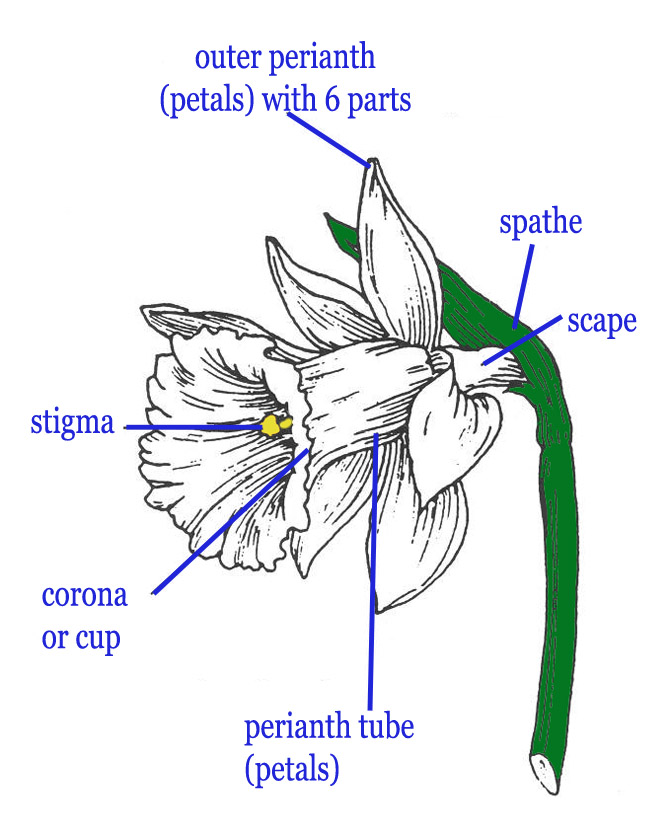
Before the snow and sleet arrived, I picked a few bright daffodils to sketch.  I kept the flowers in my fresh water glass throughout the week as inspiration.  One of the sketches was used as the basis for my first large watercolor.  The sketch captures the flower and leaves leaning out of the cup.  The bright red of the corona's lip reflect on the surrounding flower, even in the bluish shadows.  I used this sketch as my thumbnail for the larger painting.  I drew a box around the part of the sketch I wanted to use in my larger painting.  At the bottom of the sketch are some color mix test blocks.  I used them to help me decide which pigment combinations to use while doing the sketch and for the background in the larger painting.  

For the larger watercolor I pushed the colors to make a more vibrant painting.  I increased the reflected colors on the petals and added Quinacridone Gold to the shadows.  I also added a wet in wet background of blue and green to provide contrast.  The result is a bright cheerful spring painting, that communicates that feeling.


Sunday, April 9, 2017

JCCS Dynamic watercolor workshop

I spent an unexpectedly cold week at the John C. Campbell Folk School in March while taking a class in Composing Dynamic Watercolors.  Taught by instructor Annie Pais and assistant Suzy Deslauriers. We had hoped to be able to do some plien air painting around campus capturing spring unfolding, but it was too cold for that.  Instead we stayed in the studio, painting still life compositions or from photos.  Working in the studio all week had advantages.  We had group exercises and provide were able to provide feedback to each other while actively painting.  I really enjoyed the social interactions and watching everyones paintings come to life around me.

We started our class with some drawing exercises.  We did several blind contour sketches of each other while sitting in our discussion circle.  This turned out to be a lot of fun, both to do and to share.  Sometimes the images look more like a Picasso, then the person we were drawing.  Mine exhibited disembodied heads and disjointed faces, but the drawings still contained aspects of the people I was drawing.  

Then we moved on to do some blind contour, contour and thumbnail sketches of objects around the studio.  We arranged several objects then used a view finder to help us select the composition to use for our thumbnail sketches.


Blind contour Contour Thumbnail sketch